Body Type Calculator
Determine your body shape based on shoulder, chest, waist, and hip measurements
RELATED TOOLS 
Body Type Calculator
A body type calculator is a measurement-based tool used to identify general body shape categories by comparing shoulder, chest or bust, waist, and hip proportions. It assigns a body type based on how these measurements relate to each other rather than focusing on weight or appearance.
This type of tool is often referenced for educational purposes, clothing fit analysis, fitness planning, and understanding natural body proportions. A body shape type calculator focuses on structure and balance rather than size.
Overview
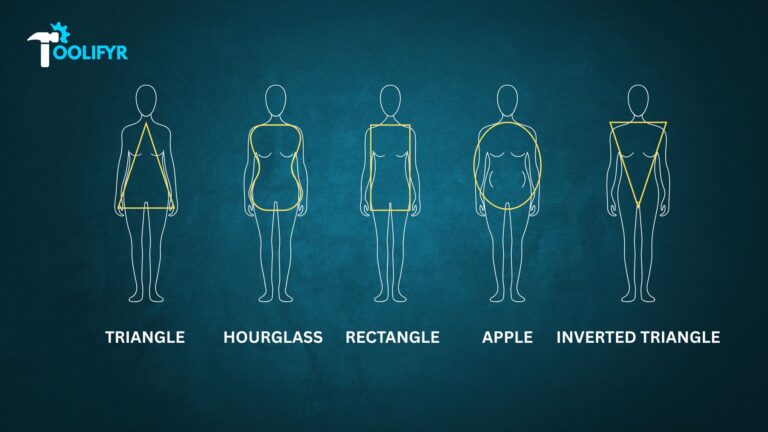
The body type calculator classifies body shape into one of five commonly recognized categories: Rectangle, Triangle, Inverted Triangle, Hourglass, or Oval. These classifications are based on standard anthropometric patterns used across fitness, fashion, and health-related references.
Purpose and Use
A body type calculator may be used to better understand body proportions, assist with clothing selection, track physical changes over time, or provide general reference information related to body structure. It does not evaluate health, attractiveness, or fitness level.
Structure and Layout
The calculator interface is typically divided into a measurement input section and a results display. Users enter shoulder, chest or bust, waist, and hip measurements, and the calculated body type is shown based on proportional comparisons.
Gender Selection
Gender selection is included to apply different proportional thresholds. Male and female bodies tend to distribute muscle and fat differently, which affects body shape classification logic.
Measurement Inputs
Measurements are entered using a flexible tape measure. All values must use the same unit, either inches or centimeters. The calculator compares ratios, so the unit itself does not affect results as long as consistency is maintained.
Types of Body Types (Male)
For males, body types are commonly identified based on shoulder dominance, waist width, and hip balance.
Rectangle: Shoulders, chest, and hips are similar in width with minimal waist definition.
Triangle: Hips are wider than shoulders with noticeable lower-body dominance.
Inverted Triangle: Broad shoulders with narrower hips, often associated with athletic builds.
Hourglass: Balanced shoulders and hips with a visibly smaller waist.
Oval: Waist measurement is larger than shoulders and hips, with central weight distribution.
Types of Body Types (Female)
Female body types are classified using similar categories, though thresholds differ due to natural differences in fat distribution.
Rectangle: Bust, waist, and hips are similar with limited waist definition.
Triangle (Pear): Hips are wider than bust with a defined waist.
Inverted Triangle: Broader shoulders or bust compared to hips.
Hourglass: Bust and hips are balanced with a significantly narrower waist.
Oval (Apple): Waist is the largest measurement with less hip or bust definition.
The Five Body Types Explained
These five categories represent general proportional patterns rather than strict rules. Many individuals may fall between two types or display characteristics of more than one body shape.
Rectangle
Measurements across shoulders, chest or bust, and hips are similar, resulting in a straight silhouette.
Triangle
Hips are noticeably wider than shoulders, creating a lower-body dominant profile.
Inverted Triangle
Shoulders or chest are broader than hips, forming a top-heavy appearance.
Hourglass
Shoulders and hips are balanced with a well-defined waist, forming symmetrical proportions.
Oval
The waist is the largest measurement, with less distinction between upper and lower body.
How Measurements Are Interpreted
The body type calculator uses proportional comparisons such as shoulder-to-hip and waist-to-hip ratios. These ratios help determine how measurements relate rather than relying on absolute size.
Example Calculation
Example:
Shoulders: 100 cm
Chest/Bust: 98 cm
Waist: 75 cm
Hips: 100 cm
In this example, shoulders and hips are nearly equal in width, while the waist is noticeably smaller. Based on proportional comparison, the body type calculator would classify this measurement set as an Hourglass body type.
Answer: Hourglass – The shoulder and hip measurements are balanced, and the smaller waist creates the characteristic hourglass silhouette. This shows how the calculator evaluates relative proportions rather than absolute size.
Important Notes
Body shape classification is informational and descriptive. Genetics, age, lifestyle, and muscle development all influence proportions. No body type is considered better or worse than another.
Frequently Asked Questions
Can a body type change over time?
Yes, significant changes in weight, muscle mass, or fat distribution can alter body proportions.
What if results seem between two body types?
Many individuals do not fit perfectly into one category. The calculator shows the closest proportional match.
Does a body type indicate health?
No, body type describes structure only and does not measure health, fitness, or wellbeing.
How often should measurements be taken?
Measurements can be taken monthly when tracking changes, or occasionally for reference purposes.
This body type calculator is intended for general informational use and follows commonly referenced body shape classification standards used in fitness, fashion, and educational contexts.
“`
ALSO CHECK